
Roof Repair in Port Charlotte, FL
The large majority of leaking roofs in Port Charlotte need one component rebuilt. Working out which component takes time in the attic first, and only then any time with a hammer.
Call (941) 401-8127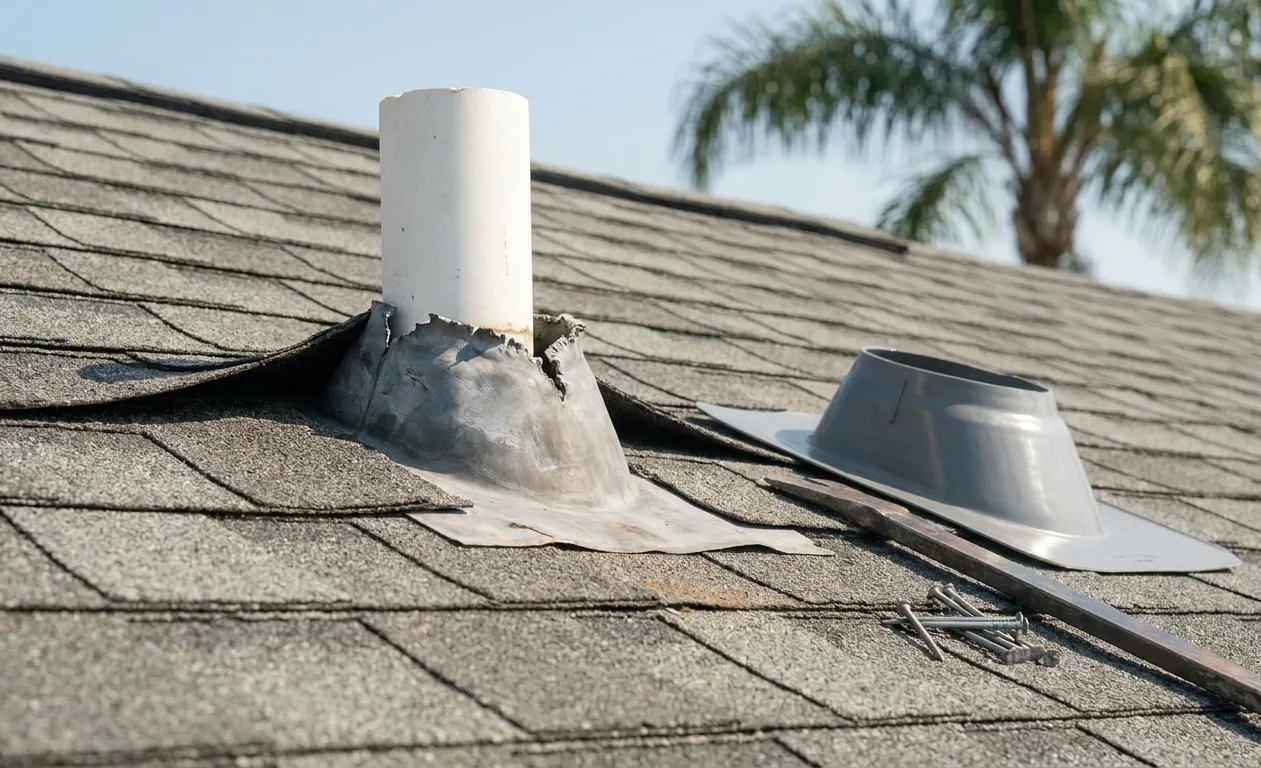
Start under the roof, then go on top of it
Rain that gets past the roof covering does not fall straight down. It lands on the plywood, follows the slope to a seam, drips onto a truss and runs along the top of it until something interrupts the flow. On the low-pitched hip roofs that cover most houses here, that journey can be the length of a room.
So the search begins in the attic with a light. Old leaks leave brown tide lines on the sheathing and rust blooms on the truss plates. Fresh ones leave the insulation packed down and gray. Following those marks uphill leads to the place the water came through, and that spot is what gets opened up on the roof side.
Attics in these houses are shallow, hot and tight at the eaves. It is unpleasant work in July and there is no substitute for it.
Where Port Charlotte roofs usually let water in
The open field of a roof seldom leaks while the material still has life in it. Water enters at interruptions, and on local houses these are the common ones:
- Lead vent boots. Soft lead sleeves around plumbing stacks are standard on Florida roofs, and squirrels gnaw them down to sharpen their teeth. Once the lead sits lower than the pipe rim, every storm sends water down the outside of the stack.
- Off-ridge and ridge vents. Low-profile vents work well in vertical rain. Squalls here arrive nearly horizontal, and an older vent without a baffle takes water straight through its louvers.
- The line where a lanai roof meets the house. A flatter roof butting into a steeper one or into a stucco wall needs proper flashing behind the stucco. Many have a bead of sealant doing that job, and sealant cracks in the sun.
- Valleys. Two slopes drain through one channel. Leaf litter from oaks and palms dams it, water backs up sideways under the shingles or tiles, and the valley metal corrodes underneath the debris.
- Skylights and sun tunnels. The curb flashing and the dried-out gasket are the weak points. The acrylic dome itself usually outlives both.
- Screw heads on exposed-fastener metal. Each screw seals with a small rubber washer. After enough summers the rubber hardens and splits, and a roof with several thousand screws starts weeping at dozens of them.
Tile roofs are repaired from underneath the tile
A cracked tile looks like the problem and usually is only part of it. Concrete and clay tile are a hard shell that takes the sun and most of the rain. The waterproof layer is the underlayment below, and after two or three decades of heat it turns brittle, splits at the laps and lets go around the fasteners.
A lasting tile repair means lifting the tiles over the affected area, cutting out the failed underlayment, checking the deck, laying new membrane lapped correctly into the old, and resetting the tile with replacements for any that broke. Matching is the hard part. Tile profiles get discontinued, and a replacement that is a close cousin will not interlock properly.
When Port Charlotte Roofing quotes a tile repair, the estimate says whether matching tile has been located or whether salvaged pieces from a less visible slope will be moved to the front of the house. You should know that before the work starts.
Flat roofs over lanais and additions
Low-slope sections cause a large share of the leak calls in this area. They were often added after the house was built, sometimes without enough fall, and they collect water where the newer roof joins the original one.
These are membrane systems: modified bitumen on older ones, single-ply on newer ones. Repairs are made with compatible membrane, heat-welded or torch-applied into place and tied into the existing surface. Roof coating from a bucket has its uses on a sound roof, but brushed over an open seam it hides the leak for one season and makes the real repair harder.
If water stands on the roof two days after rain, the membrane is not the root cause. The slope or the drain is, and a repair that ignores it will be repeated.
When a repair is money badly spent
There are roofs we decline to patch, and we say why. Shingles that crack when lifted cannot be repaired without breaking the ones around them. Tile roofs leaking in three or four separate rooms have underlayment that is finished everywhere, and fixing one area simply moves the next leak a few feet along.
Insurance comes into it too. A roof near the age where your carrier starts asking questions may be better served by an inspection and a plan than by another repair invoice. We will lay out both routes with what each is likely to buy you in years, and leave the decision with you.
Questions people ask us
Why does my roof only leak in certain storms?
Because wind direction decides where the rain is pushed. A leak that appears only when storms come from the southwest points to a flashing, vent or lifted edge on that side of the roof. Note which way the weather came from each time and the search becomes much shorter.
Can you repair a roof in the rainy season?
Yes. Mornings are usually dry even in July and August, so repair work is scheduled early and closed up before the afternoon storms. Membrane and sealant work needs a dry surface, which sometimes means waiting a day.
Will replacement shingles match my old ones?
They will be close and they will look newer. Sun fades every roof here within a few years, and manufacturers change their color blends. On a slope facing the street we will show you the candidate shingle against the roof before installing it.
Is a roof repair covered by a permit?
It depends on the size of the repair. Minor work is handled differently from a section replacement under the county's rules. Your estimate will state whether a permit applies to the work described in it.
How long will a repair last?
A repair made under the roof surface with matching materials should last as long as the roof around it. A surface patch with sealant is temporary, and we will call it that if it is all the situation allows.