
Emergency Roof Repair in Port Charlotte, FL
When rain is coming through the ceiling, two jobs matter: limit what gets wet inside, and get a cover over the opening that will still be there after the next squall.
Call (941) 401-8127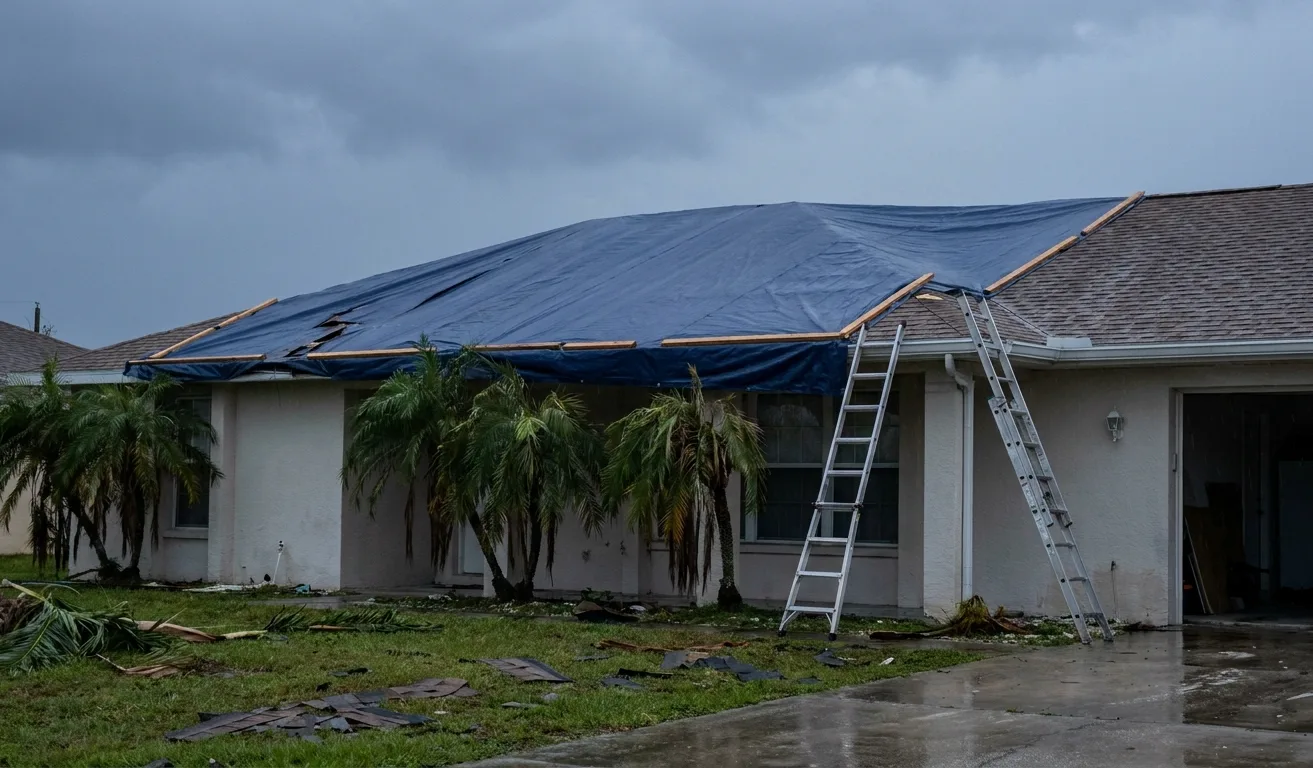
What to do inside before anyone arrives
Stay off the roof
Wet shingles, wet tile and wet metal are all slippery, and storm-damaged decking may not hold a person. Nothing up there is worth a fall.
Keep water away from electricity
If water is running through a light fitting, a ceiling fan or near the panel, switch that circuit off at the breaker and leave it off.
Catch it and move what you can
Buckets, a plastic bin, towels. Shift furniture, rugs and electronics out from under the wet area and roll plastic sheeting over anything too heavy to move.
Relieve a ceiling that is bulging
Drywall holding a pool of water will eventually drop in one piece. Where it can be reached safely from the floor, pierce the sagging spot with a screwdriver and set a bucket under it so the water comes out on your terms.
Take photographs
The ceiling, the floor, the damaged belongings, and the roof from the ground if you can see it. Dated pictures taken before any cleanup are useful to everybody who gets involved later.
What a tarp has to do in Florida wind
The blue tarps that appear across Charlotte County after every hurricane vary a great deal in how they are put on, and a poorly secured one causes fresh damage. A tarp weighted with bricks or sandbags stays put in still air. In a 40 mph gust it lifts, flogs the shingles beneath it and funnels rain into the hole it was meant to cover.
A cover that holds runs from below the damage up and over the ridge, which leaves no upper edge for rain to run beneath. The edges are wrapped around lengths of lumber and those battens are screwed through into the framing. Fastener holes are kept to the area that will be replaced anyway wherever possible.
On tile, the method changes. Tarps do not sit well over a barrel profile and walking the tile breaks more of it, so displaced tiles are reset or the exposed underlayment is sealed directly. Large openings after a major storm are sometimes better served by heat-shrunk wrap than by tarp, because it can stay on for the months a full re-roof may take to schedule.
Details that help when you call
- Whether water is entering now, or entered earlier and has stopped
- What the roof is covered with: shingle, tile, metal or a flat membrane
- What caused it, if you know. A fallen limb, missing shingles and a lifted panel each need different equipment
- One storey or two, and whether a pool cage or tree blocks access to that side
- Whether power is on at the house
- The address and nearest cross street. Signs and mailboxes are often gone after a hurricane
You do not have to know all of it. A clear description of the room and the amount of water is enough to start with.
A temporary cover is the first half of the job
A tarp buys time and nothing more. Sun breaks down polyethylene in a matter of weeks here, and the battens holding it are only as good as the wood they are screwed into. Before the crew leaves you should have a written note of what was covered, what was found underneath, and what the lasting repair involves.
Keep the invoice and any material receipts for the temporary work together with your photographs. Property policies commonly expect an owner to take reasonable steps to stop further damage. Whether and how yours treats that cost is a question for your insurer or agent. Florida law does not let a roofing contractor interpret policy terms for you, and we do not try.
How the line forms after a named storm
In the days after a hurricane, every roofer in Southwest Florida has more calls than hours. It is better to tell you plainly how the order is set than to promise a time nobody can keep.
Homes with rain entering living space come first, with priority for those where the occupants have nowhere else to go. Roofs that are damaged but still shedding water are scheduled next, grouped by neighborhood so that a crew working a street in Deep Creek or along Edgewater Drive can cover several houses in one trip. Blocked roads, closed bridges and curfews can all slow that down. When you reach Port Charlotte Roofing you will be told where you stand in that order and what could change it.
Questions people ask us
Can a roof be tarped while it is still raining?
Sometimes. Light rain with no lightning and manageable wind can be worked in on a walkable roof. Lightning, strong gusts or a steep wet surface make it unsafe, and in those conditions the work waits for a break in the weather.
How long can a tarp stay on?
Treat it as a matter of weeks. Florida sun weakens tarp material quickly, and each storm loosens the fastenings a little. If the permanent repair will be delayed, the cover should be checked and renewed.
A tree limb went through my roof. Who do I call first?
If the limb is resting on the house, a tree service usually has to remove it before the opening can be covered. Call both. The roof is covered as soon as the weight is off and the hole can be reached.
Should I call my insurance company before the roof is covered?
Report the damage promptly, and do not let the reporting delay stopping the water. Photograph everything first. Your insurer or agent can tell you what your policy asks of you after a loss.