Metal Roofing in Port Charlotte, FL
Drive any street off Edgewater or through South Gulf Cove and the number of metal roofs rises every year. The reasons are sound, and so are a few cautions that apply specifically to homes this close to salt water.
Call (941) 401-8127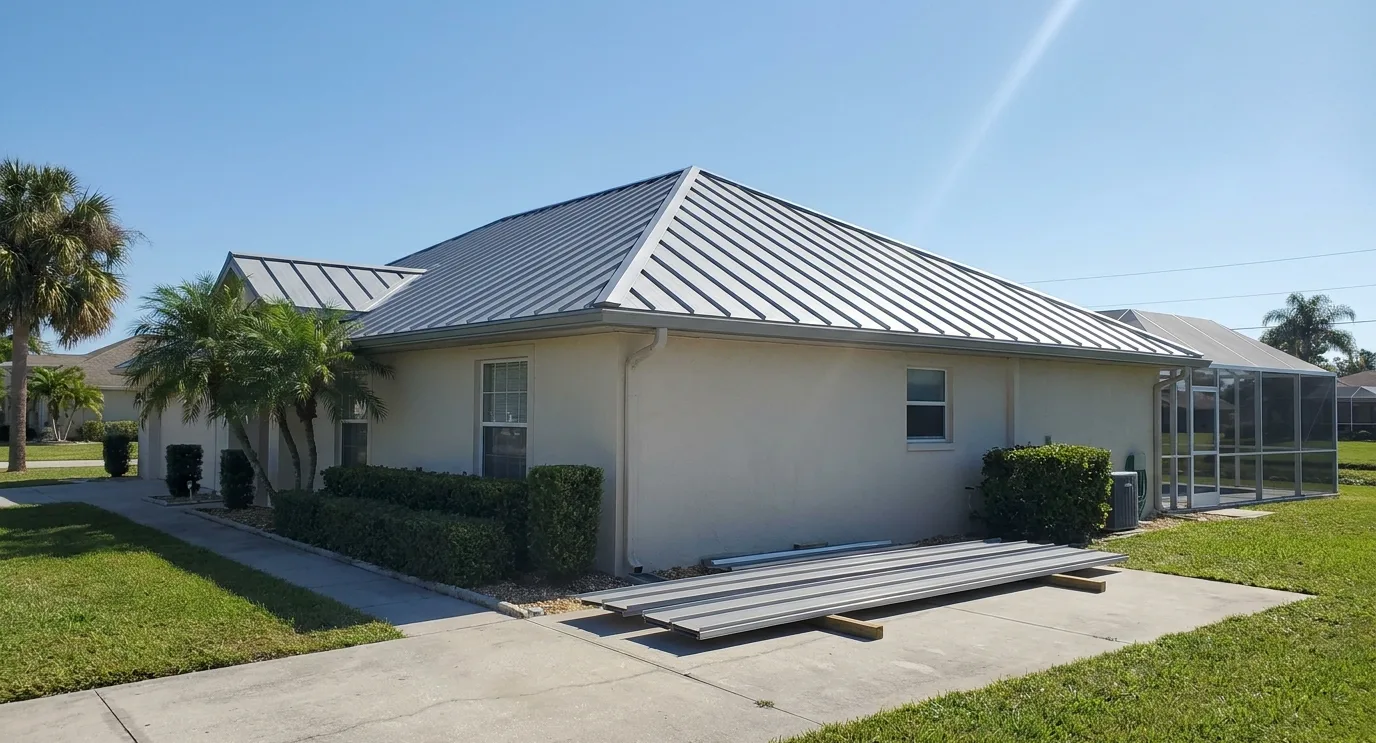
Why owners here choose metal
The main argument is longevity under sun. Asphalt is an oil-based product and Florida heat ages it steadily. Painted metal has no oils to lose. A well-installed panel roof can reasonably be expected to outlast two shingle roofs on the same house.
The second argument is wind. Long panels fastened to the deck along their full length present very few edges for wind to lift. The third is weight: metal is the lightest of the common roof coverings, so it suits any house that currently has shingles without structural changes.
Against that, it costs more up front than shingle, dents can be permanent, and a damaged panel is replaced whole. It rewards owners who plan to stay.
Two families of panel
- Standing seam. Flat pans with raised vertical ribs, held down by clips hidden beneath the seams. No fastener passes through the weather surface. The panels can expand and contract along their length, which matters on a dark roof in August. This is the premium option and the one with the fewest places to leak.
- 5V-crimp and other exposed-fastener panels. The traditional Florida metal roof, with five small V-shaped ribs and screws driven through the face into the deck. It costs less and goes on faster. Every screw relies on a rubber washer, so the roof needs its fasteners checked and periodically renewed.
Both can be engineered for the wind speeds that apply in Charlotte County. The difference shows up twenty years later, in how much maintenance each one has needed.
Salt water changes the choice of metal
Port Charlotte has a harbor on one side and many miles of tidal canals running through its neighborhoods. Salt carried in the air settles on roofs well back from open water, and steel and salt do not get along.
Coated steel, usually sold under the Galvalume name, is strong, widely available and performs well inland. Its manufacturers typically exclude or shorten warranty coverage for installations within a stated distance of salt or brackish water. Aluminum does not rust and is the usual recommendation on waterfront and near-waterfront lots, at a higher material cost and with slightly less dent resistance.
Before recommending either, Port Charlotte Roofing looks at how far the house sits from the nearest salt water, including the canal at the end of the yard, and reads the warranty terms for the specific panel against that distance. You should see that clause yourself before signing for a steel roof on a canal lot.
What sits under and around the panels
The panels are the visible third of a metal roof. The rest is what determines whether it stays dry.
High-temperature underlayment
The space under a metal panel gets hotter than under shingles. The sealed layer on the deck has to be a membrane rated for that heat, or it softens and sticks to the panel.
Compatible fasteners
Stainless or coated screws matched to the panel metal. Mixing metals sets up corrosion at every contact point, and it shows first as rust stains below the screw heads.
Hemmed edges and closed trim
Panel ends folded over the eave trim cannot be peeled back by wind. Ridge, hip and rake trim is closed with foam or metal closures so rain cannot blow in beneath it.
Nothing that reacts with the roof
Copper pipe, pressure-treated lumber and runoff from an air conditioner's copper lines all attack aluminum and coated steel. They are kept from touching the panels.
Heat, noise and lightning
Three questions come up on almost every metal estimate.
Heat first. Light-colored and reflective-coated panels turn back a good part of the sun's energy, and many owners notice a cooler attic after switching from dark shingles. Color choice matters more than material here.
Noise next. The drumming people remember is from metal on open framing, as on a barn or a carport. Over solid plywood, a membrane and attic insulation, heavy rain sounds much the same as it does on any other roof.
Then lightning, which this part of Florida sees a great deal of. A metal roof does not make a strike more likely. Lightning goes for height and location. Metal is non-combustible, which is an advantage if a house is struck.
Questions people ask us
How long does a metal roof last near the coast?
Several decades when the metal and coating suit the location and the roof is rinsed and checked periodically. Aluminum standing seam is the longest-lived choice near salt water. Exposed-fastener steel close to a canal has the shortest expected life of the metal options.
Can metal be installed over my old shingles?
We remove the old roof first. Stripping to the deck lets the sheathing be re-nailed and sealed as Florida's re-roofing rules intend, and it gives the panels a flat surface. Metal laid over shingles also traps heat and telegraphs every bump beneath.
Can I walk on a metal roof?
Carefully and only where it is supported. Step in the flat of the pan close to the fastener line and never on a seam or a rib. Wet or dew-covered metal is very slippery, so it is best left to people with the right footwear.
Do solar panels work with metal roofing?
Very well with standing seam, because mounts clamp to the raised seams without drilling through the roof. Exposed-fastener panels need penetrating mounts that must be sealed. Mention solar plans early, since they can influence which panel type makes sense.
Does a metal roof need maintenance?
A little. Rinse salt and leaf debris off, keep valleys and gutters clear, and have exposed fasteners and sealant joints inspected every few years. Touch up scratches promptly so the bare metal is not left open to salt air.